
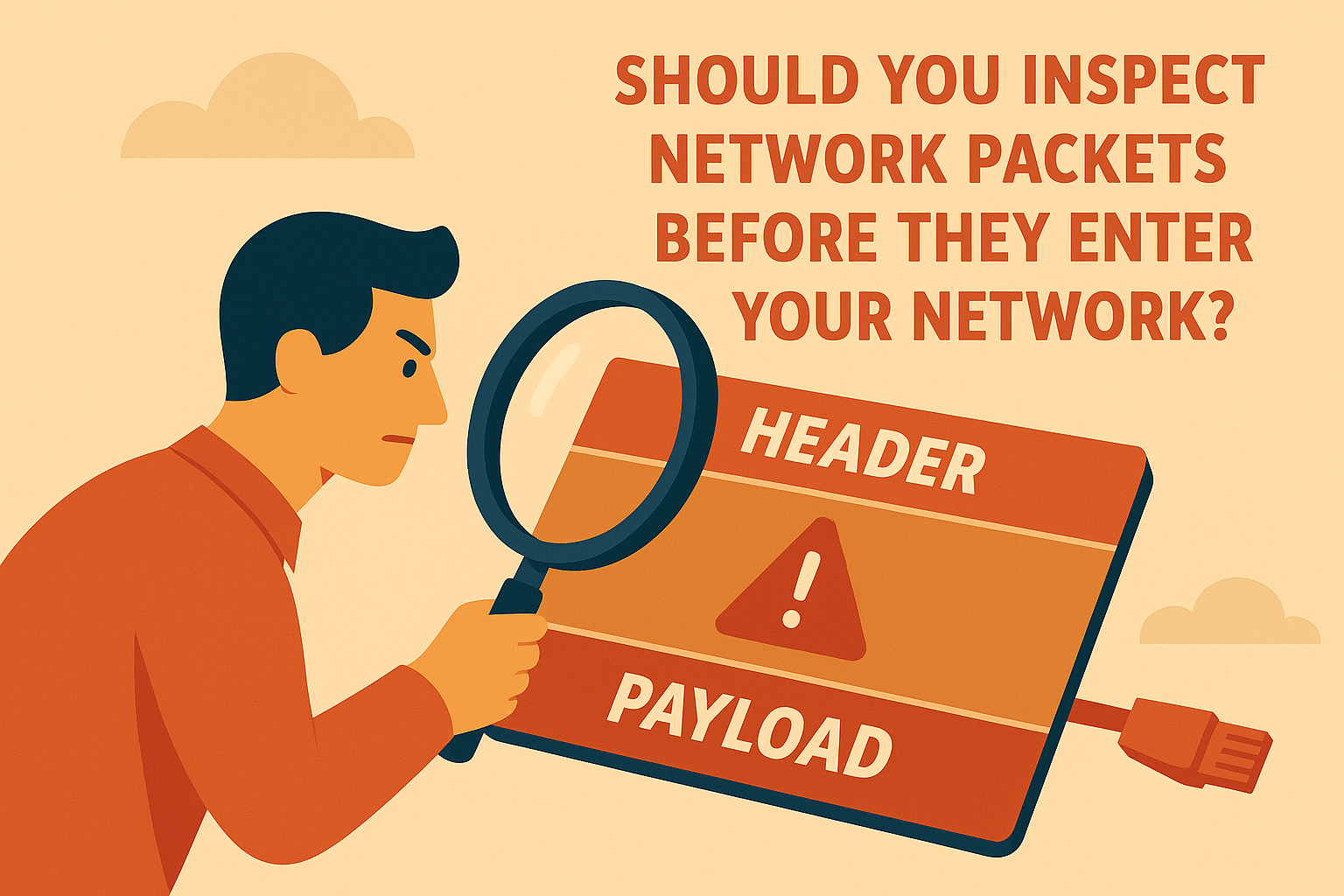
Through the years, one principle has remained true in network security: it’s better to prevent an attack than to respond to one.
But that raises a question we often overlook: Are we inspecting what enters our network — deeply enough?
Firewalls are the usual go-to. They filter traffic at the perimeter and apply rules based on IPs and ports. But many threats don’t live in the headers — they hide in the payload. So unless you’re inspecting what’s inside the packets, you’re only seeing part of the picture.
What’s in a Packet?
A network packet typically consists of two parts:
- Header: Source/destination IP, ports, protocol info
- Payload: The actual data being transmitted
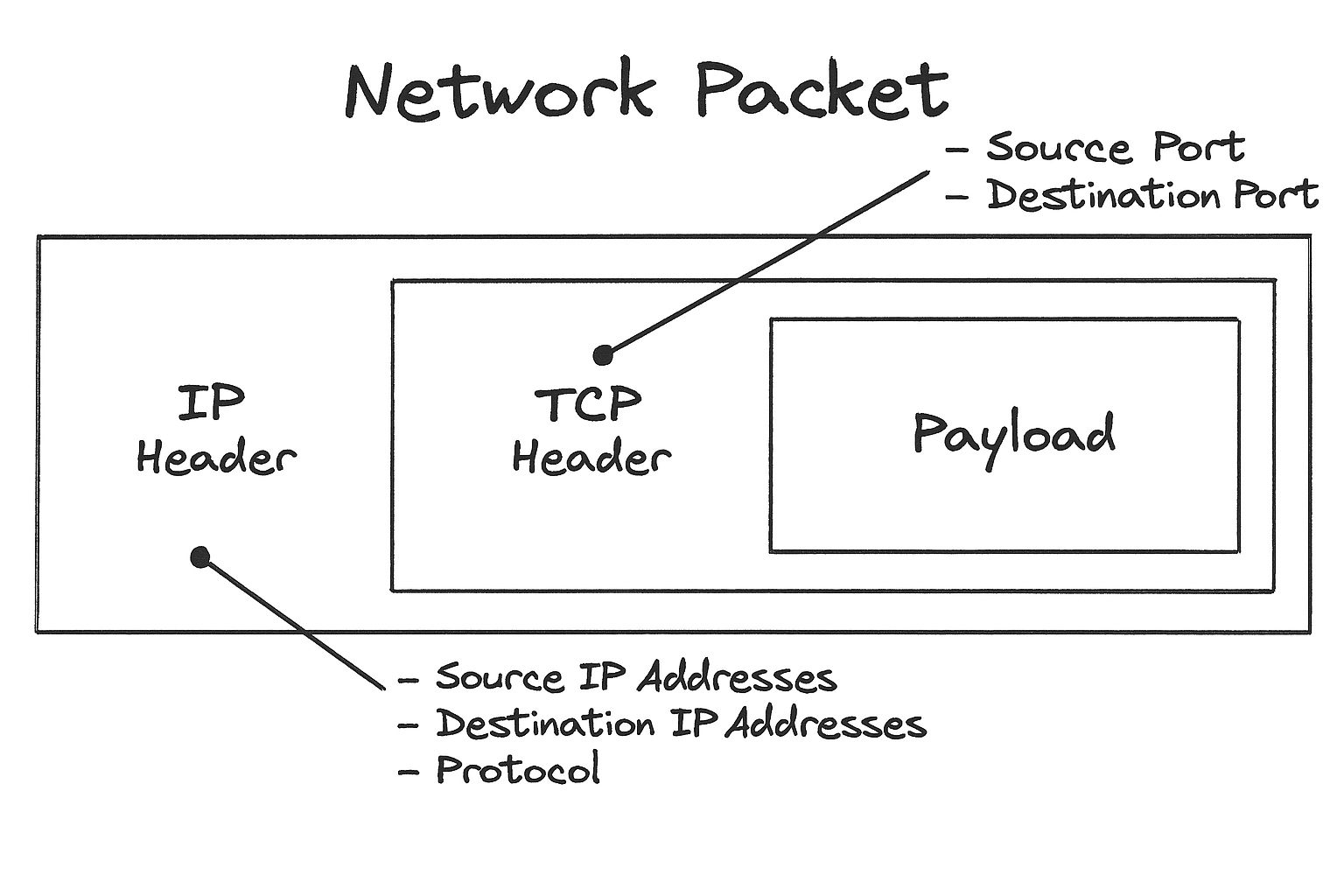
The header is like an envelope. The payload is the message inside. Most basic security tools only check the envelope — not the content.
But today’s threats? They’re clever enough to slip inside without raising a red flag.
Why Firewalls Alone Aren’t Enough
Firewalls do a good job at enforcing basic rules. They:
- Block known malicious IPs
- Restrict access to certain ports
- Enforce protocol-based filtering
But they don’t inspect the actual content of packets. If malware or spyware is tucked inside the payload, your firewall won’t notice — because it’s not looking.
It’s like scanning a package’s label, but never checking what’s inside the box.
Deep Packet Inspection to the Rescue
To go beyond basic protection, you need deep packet inspection (DPI) — the kind offered by Intrusion Detection Systems (IDS) and Intrusion Prevention Systems (IPS).
These tools analyze:
- Known attack signatures
- Protocol violations
- Suspicious payload content
- Behavioral anomalies
They can alert, log, or even block traffic — not just based on where it came from, but on what it actually contains.
But What About Performance?
Yes, deep inspection adds overhead. It can increase latency, strain resources, and make encrypted traffic harder to analyze.
But performance impact depends on:
Configuration
Tune your rules to focus on relevant threats and reduce false positives.
Architecture
Ensure your inspection stack scales with traffic growth.
Encryption
TLS inspection is powerful but complex. It must align with compliance and risk appetite.
Full TLS decryption is a topic in itself — and I’ll cover it in a future post.
What I’ve Seen in Practice
Earlier in my career, I assumed firewalls were “enough.” But I’ve seen environments get breached by threats that slipped through payloads — undetected, unchecked, and unnoticed.
And I learned: visibility matters.
It’s not just about stopping attacks. It’s about understanding your traffic. About building trust in your systems. And having a second line of defense when the first one fails silently.
A Balanced Approach
You don’t have to inspect everything, everywhere.
But you do need a clear strategy:
- Know where your inspection boundaries are
- Define which traffic deserves deep inspection
- Choose tools that do it efficiently
Security isn’t binary — it’s a spectrum of trade-offs. Your job is to place the right guardrails without grinding performance to a halt.
Final Thought
Network inspection isn’t about paranoia — it’s about preparedness.
So the next time you review your network architecture:
Before you rely on that firewall, that load balancer, or that security group…
Just ask:
“What threats are we blind to — and can we live with that risk?”
If the answer makes you uncomfortable — that’s where your inspection strategy should begin.